Key Takeaways
- What is deionised water: water with all mineral ions removed
- It offers excellent cleaning performance due to a high purity level
- It dries without leaving streaks or residue
- It reduces the need for cleaning chemicals
- It works best when paired with the right equipment
If you’ve ever noticed perfectly clean, streak-free glass, there’s a good chance deionised water played a part in it. It isn’t ordinary water. It has been carefully treated to remove impurities that usually leave marks behind.
Understanding ‘what is deionised water’ and how it works can help you achieve better results, whether you’re cleaning windows at home or working in a professional setting. It also explains why many professionals rely on it as a standard part of their cleaning process.
Water quality directly affects the final result. Even with the right tools and techniques, impurities in water can still leave visible marks. This is where deionised water makes a noticeable difference. It allows you to achieve consistent results across different surfaces without adjusting your method.
Deionised Water Meaning
The ‘deionised water’ meaning is straightforward. It refers to water that has had its mineral ions removed, including calcium and magnesium, which are commonly found in tap water.
Once these dissolved minerals are removed, what remains is pure water of high purity. This makes it especially useful for tasks where residue and streaks are a concern.
In simple terms, the fewer impurities present, the cleaner the surface will appear after drying. This is why deionised water is often described as demineralised water, as it no longer contains the minerals responsible for spotting. This level of cleanliness is particularly important for glass surfaces, where even minor marks are noticeable.
Although it is highly purified, it is not considered safe to drink as regular drinking water because it lacks essential minerals.
How It Differs from Tap Water
Standard tap water contains dissolved solids, which include salts, minerals, and other particles. When water dries, these are left behind as mineral deposits, which show up clearly on glass surfaces.
In contrast, DI water has been treated to remove both positively charged ions and negatively charged ions. This reduces its electrical conductivity, meaning it carries fewer impurities.
Because of its low electrical conductivity, deionised water can attract and lift dirt more effectively, making it highly efficient for cleaning. This property allows it to bond with dirt particles and carry them away during rinsing, leaving surfaces cleaner with less effort.
How Is Deionised Water Made?
Producing deionised water involves removing impurities at a very fine level. The aim is to eliminate not only visible particles but also invisible contaminants that affect cleaning quality.
This process provides consistency, which is important when you require predictable results on multiple surfaces or large square footage. This also enables improved long-term cleaning performance, as fewer residues accumulate over time.
The Deionisation Process
The deionisation process works by ion exchange, in which unwanted ions are removed using specialised materials. Ion exchange resins attract and capture charged ions, enabling effective removal of mineral ions from water.
These resins replace impurities with hydrogen and hydroxide ions, yielding high-purity water. This method is commonly used in industries that require precise water quality, including laboratories and cooling systems.
This method does not use heat or boiling water like other methods. And it can also be mass-produced without excessive energy per unit of DI water, making it practical for vehicle cleaning operations.
Equipment Used for Water Deionisation
Several components are typically used to produce consistent results:
- DI Resin Vessels: These contain ion-exchange resins that filter impurities and improve overall water purity.
- Reverse Osmosis (RO) System: A reverse osmosis system is often used before deionisation to reduce total dissolved solids (TDS), improving efficiency and extending the life of the resin.
- TDS Metre: A TDS metre measures total dissolved solids, helping ensure the water meets the required cleaning standard.
- Pre-Filters: These remove sediment, chlorine, and organic contaminants before the water reaches the main system, protecting equipment and improving performance.
DI vs Distilled vs Purified Water
| Type of Water | Contains Minerals? | Cleaning Effectiveness |
| Tap Water | Yes | Leaves streaks |
| Distilled Water | No | Good |
| Deionised Water | No | Best for streak-free cleaning |
Distilled water is produced through a distillation process that involves boiling water, which removes many impurities. However, it may still contain some uncharged organic molecules or organic compounds.
Purified water goes through additional filtration but may not achieve the same level of purity. Both distilled and deionised water are useful in different settings, though they are not identical in performance.
Choosing between these options often depends on the level of cleanliness required and the type of surface being treated. While both deionised and distilled water offer high levels of purity, they differ slightly in how impurities are removed and in their performance in specific applications.
Why Is Deionised Water Used for Window Cleaning?
There is a clear reason professionals rely on deionised water for window cleaning. It simplifies the process while delivering consistent, high-quality results.
1. Streak-Free Results
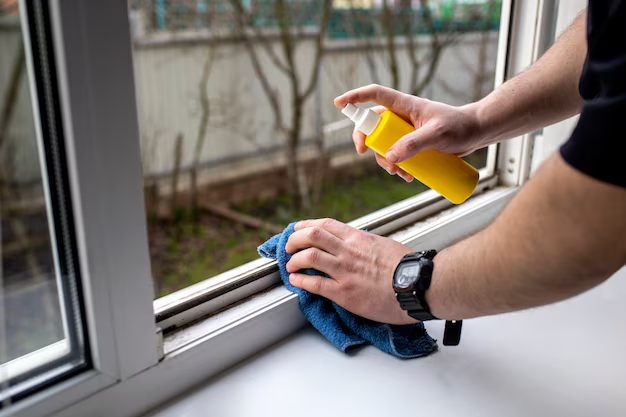
Because it contains no dissolved minerals, deionised water dries without leaving residue. This makes it ideal for cleaning windows, where even minor streaks are noticeable. Additionally, it minimises the need to clean twice, saving time and effort. This is particularly useful for larger jobs that demand efficiency.
2. No Need for Detergents
One key benefit is that additional chemicals are often unnecessary. The water’s purity allows it to absorb and lift dirt on its own. Using appropriate window-cleaning supplies alongside deionised water can further enhance outcomes and improve efficiency during cleaning tasks.
3. Better Drying
Deionised water dries evenly, reducing spotting and streaking. This is particularly effective when used with tools such as water-fed window-cleaning poles, which enable efficient cleaning without manual drying. This is deionised water used for window cleaning, which becomes even more important, especially in larger buildings or hard-to-reach places.
FAQs
Deionised water is used wherever high-purity water is required. This includes cleaning windows, laboratory work, and applications such as lead acid batteries, where low electrical conductivity is important. It is not typically recommended to drink deionised water, as it is designed for specialised uses rather than consumption.
No, they are different. Distilled water is produced through distillation, while deionised water uses ion exchange. Both remove impurities, but they work in different ways and may suit different uses. Some people may drink distilled water, but it is important to understand that it differs from deionised water in both processing and typical use.
The main advantage is the finish. Deionised water for window cleaning prevents mineral deposits, removes the need for detergents, and delivers a clear, streak-free result.


 0 Cart